The Things About Brands
Brand management and development is a serious investment for folks and a good deal of the effort is put forth in making sure the whole product or service a brand represents puts forth the right message to the market. For me a brand’s promise on service is a critical buying criteria for most things, especially when it comes to leisure.
Travel as an Experience of Brands
Travel is about the most brand aware segment for me – I am just plain brand centric with my travel decisions. Amex, Marriott and Hertz typically means everything is going to work out. That being said I’ve seen some changes in my user experience in the last 12 months with key brands I choose to work with in the travel industry, which may be a response to the economy or inconsistent execution on common processes. Doesn’t matter what the drivers – brand promises are more like concepts than promises it seems of late on my travels. Recently I’ve decided I’m over a certain hotel chain micro-brand and now it appears that the economic downturn or just an over zealous regional manager looking to make his/her bonus/free Applebee’s $25 Gift Card in Reno just may make me switch my preferred car renting company from Hertz.
A Car Rental Reality
I’ve been renting with Hertz for nearly a decade and conservatively I’ve spent over $20K, which may not be a lot in the scheme of things, but kinda feels like a big number with a single vendor to me. My most recent transaction probably won’t make me move from the brand since I think the key brand attributes are still intact:
- A reasonable price – not great price, but worth the value
- A well organized and coordinated frequent traveler program
- Generally OK cars regardless of the situation – vacation, business or group travel.
The way I see it, if you can find a single company who can provide a service consistently regardless of location or the use case that’s a pretty important thing as a traveler, even if it costs a little more. All you need is one username and password, one process to learn….. My most recent trip started no different for the most part, but an interesting use case in customer engagement emerged from my most recent vacation rental with Hertz from even before I got my keys.
My experience online was great, got a van, needed a van. With Burning Man in the region I expected to get above average rates, but not with Hertz an unadulterated price book was made available and I had a reservation in minutes. I was definitely pleased to see that Hertz wouldn’t jack rates insanely because of Burning Man, as other vendors did with like product in services during the period.
My Hertz experience varied from the start, I had to pick up my keys instead of strolling straight to the car, but this happens at small airports and the service was good at the counter, albeit a little odd. During the transaction there was this weird forced random Burning Man reference. I go to lots of place and most interactions are absent a “why I was in town” when it comes to the car rental place. Paraphrase below:
ME: Man, can you give me my keys
HIM: ID
ME: <hands id> Appreciate this <gets keys> thanks man
HIM: You going to burning man?
ME: Absolutely – be good, cheers!
Off to the car thinking these folks are certainly friendly and appear to be excited bout the influx of diverse folks for burning man – kinda cool…. I quickly find the van which I rented, drop in the bags and start getting in the car and I am greeted with the following “valued” Customer Message:

Well perhaps with this welcome as a customer I should have seen Burning Man remotely or minimally selected another vendor such as Enterprise car rental. At this point, my car rental is becoming an increasingly emotional commercial transaction on both sides. But with a week of vacation ahead and a little rational thought applied for a second or two, I understand that folks need to be aware that should they return a car with something that could be considered beyond normal wear and tear there might be a fee.
Good business – communicate with your customer your needs and the responsibility of the consumer.
Then I started thinking about the $175 charge, as a business guy, threatening essentially a 2X market rate should work and could represent a new little opportunistic profit center – good job Hertz! I’m now well educated and aware there is some hyper sensitivity about Burning Man.
So just to let you know – cars get dirty on the playa. After a week in the desert the car was a little over the top dirty and I clearly accepted the warning as somewhat valid, even if not customer centric, since it could be a bunch of work to clean. I actually should know, I did it TWICE before turning it in.
Decision Cycle – Hertz clean for Crazy Price or Something else?
With warning in hand and a brief discussion on how to approach the situation, Em and I are off doing ROI and time benefit analysis as we head out on 80 W away Black Rock City. From a brand perspective, you might not what your customers doing risk analysis and ROI right after a completed a commercial transaction – just an idea…
As a math fan, I quickly figure out that is clearly more financially beneficial to detail the car myself after about 10 miles of discussion. Well not really myself, someone else, was the plan but I figured I could ultimately contain my spend to say a $100 worst case. So on our way out of the desert we had it detailed in Reno and the actual spend was only $90 with tip.
With that task done in full compliance of the warning it was on to Lake Tahoe for a couple of days. Just as a point of information – did you know it’s dusty their too? It not like the desert but dusty. Yup, so the car did get a little more dusty on the ride to the lake and our gear added some dust and dirt into the van trunk area we notice when we left for the airport so we stopped for a second car cleaning.
After all, we already $80 already invested down this decision path. So a quick stop at self-service car wash just outside Carson City , only 20/25 miles from the airport, made it on to the agenda. We joked that it was an acceptable investment protection to purchase the following items/services:
- Cleaning stuff – $7
- Using Car Wash Vacuum – $3.50
- Quick Rinse and Wax in the self-service wash – $4-ish
- Paper towels – $2
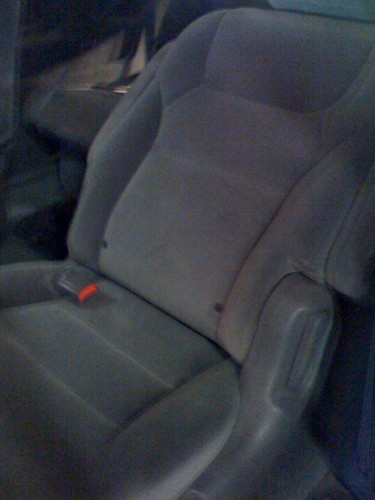
In just under 15 minutes a clean car again! Fast forward 25 minutes: An extra charge for having to detail the interior of the car was the verdict from Hertz, good news only $75.00. At least, I didn’t get charged the whole $175 because I did a “good job” on the exterior, not my words but the cheerful manager who assessed the fine. I actually think I did good job on the interior too, but you be the judge, sorry iPhone picture quality – the whole set is here..
Brand Integrity and Consistency
Fairly clean stuff is how I saw it and still do. Every car I rent in Chicago in the winter is dirtier – inside and out. So just how did the consistency of the brands processes in Reno vary from standard, since no one actually looked at the interior of the car prior to my assessment of a fee? Revenue? Gift Card?
I know that travel can sometimes be exciting and confusing, but I’m pretty sure no one opened a doors on any part of the vehicle prior to my being informed I was being charged for an interior detail.
The actual flow of the car return process deviated from the standard Hertz experience as soon as I was scanned – no inspection, no “would you like to leave it on the amex”, but a an immediate waive over of the shift manager or someone who was allowed to wear a white shirt instead of the outside uniform, regardless definitely a person of authority. Actually a nice person I think, who instead of saying “Hello, how was your car?”, informs me that whilst I did a nice job on the outside I was still being charged for an interior clean. Weird – as no one has STILL looked at the car interior yet….. After my being assessed the fee, a real inspection occurred which again complimented me on my thoroughness, this time on the engine, yet still resulted in a fee.
That’s my story no real point, except it make mes wonder if Hertz should have:
- Raised my prices for the week to make it not such a damaging brand experience for me
- Should have followed their traditional processes, like inspect the car first to provide some consistency
- Not had a same store sales contest for the best shift manager who “up charges” the most details
- Should just overall raise the rates of everyone to maintain quality of service and consistency
- Not messaged me with the warning and made me more aware of the situation throughout the rental period, thus reducing the likelihood of my paying attention to the whole thing and just accepting that a fee was due.
I obviously don’t know all the drivers for the deviation from my typical brand experience, but the process and experience inconsistency is the most memorable for me, not the $75. In the end, I think I’m like $5 ahead (less opportunity costs) and perhaps just a little more willing to choose another vendor.
Funny thing about loyalty is consistentcy can be more important than dollars for some….maybe not to Hertz.

