A Presidential Brand: Effective Campaigning

So with all of the excitement over the last week with the presidential election over there has sure been a good deal of open interaction, discussion and apparent hope which the election brings. The most interesting theme in all of the discussion is that with the election over everyone, regardless of the vote they cast are optimistic about what lies ahead – even with a 6+% unemployment rate (rumored to go MUCH higher), compressed 401K’s and the risk of increased taxes for some. So a friend of mine John put it best “While I’m not sure how this will all work out, the fact that folks are focusing on the minor increase in taxes in my circle of friends is a little off the mark, they should be focusing on the 32% loss in their portfolio’s.” Interesting how the election reflections change when it’s over, since before the election John was MOST concerned about the incremental taxes he was going to pay. So why are things a little different now, then they were a month ago in folks’ eyes?

The Message is the Man

After a lengthy discussion with Sheryl, an alleged blogger here as well, but she is WAY overwhelmed with her marketing consulting workload of late, I think it is basically brand management by each candidate which determined the outcome. As an aside, for a down economy, consultants are getting a good deal of work and it makes sense, since it is always an interesting business proposition to turn fixed costs into variable costs and the marketing space is no different. Sheryl’s thoughts are along the lines that running a successful political campaign, at least in this year’s election, had a lot to do with effective application of key marketing and brand management principles. She thinks that staying on message was a key differentiator for Obama in the campaign. The story and vision portrayed by Obama never changed. Things suck and need to change, not sure I have all the answers, but let’s work this out together and things just might change. Yes, grossly oversimplified or is it?

Keep it Simple – Keep it Constant

For 21 months, the drum beat of the Obama campaign was consistent, constant and simple. That’s not the case with the McCain campaign. The McCain campaign struggled with the message, and it was evident with the multiple changes in staff, message and his change in addressing the populous. Back to John’s comments who definitely voted McCain “Man, at the end I had no idea who McCain was. His change in position and posture almost made me forget I was a Texan and vote Dem.” His position is very similar to my take on this as well, along with Sheryl’s – not so much the wife’s opinion, but at least a shared concept by more than a few of my friends and myself — The guy who won the republican nomination was NOT the same person who ultimately lost the election.

The core values of being a maverick, a person that can reach across the isle and drive change were left somewhere along the way in campaign staff changes, negative ads and quirky debate rhetoric and behavior. Think about if you were to do a negative marketing campaign – what do you think the results would be? I guess it all depends on how you define negative, but let’s say calling out a competitor for “X” and declaring “X” to be bad. Would it damage your brand? Would it add new attributes to the brand? Would it just move the brand? It could do all three, which ultimately could impact success in the marketplace, not unlike what we saw in the election.

Vision: Emotional Execution

Everyone wants to be the part of something good, something big and something innovative and this is what Obama created – a path forward for everyone to participate in. For many the message was not just an idea, but also an emotion – a positive vision forward. It may not be the right path, it may ultimately be a bumpy path, but the message was we will be doing this together which was ultimately embraced by the voters. Inclusiveness as a core attribute to Obama’s vision is another delta in the messaging platforms during the election. The initial McCain platform was about bringing together folks towards a common goal and then it changed – not sure what you do when you are down in the poll, but this may be an interesting case study for politicos to look back on. The McCain messaged moved from hope and security to fear and exclusion – not a very compelling or differentiated message and ultimately may have been a key driver to the loss.

Taking your brand to the marketplace requires consistency and dedication toward a single vision and if you are unable to sustain that it is typically just a little harder to get where you want to be, when you want to be there. I guess core branding principles could be as applicable to politics as it is to products.

Stuck in the Middle: The Committer

I haven’t done a piece around leadership personas for a while.  The main reason is things haven’t been that slow to think about leadership styles of late and I have just been getting things done, rather than thinking about things.   What a quandary, so I’m writing another piece on leadership, perhaps just to feel a little better about myself or to help a friend out.

This series is basically a pragmatic look at leadership, management and execution as it relates to dealing with specific leadership personas and how to get things done effectively inside a given management mode. Some of the other one’s I’ve addressed are The Collaborator, The Geologist, The Amoeba, The Visualist, The Fence Mender, The Vassalizer, The MBIFM, and a couple of other ones.

It is always an interesting set of problems to solve when thinking on how organizations can communicate better, develop their people, how to look at executing as an organization more effectively and how contributors can create excitement in a given role, even if they have been there a long time.  It might be important to note, that everyone needs to contribute – leadership is as much about a team and doing what needs to be done, as it is about “managing”.  It’s the last concept which got me back to thinking on this series based on a conversation I had with a friend the other day. Karen is consistently having items thrown into her queue without regard of any other items in progress and it is done via a series of ad hoc commitments which are cascaded down via email with no other interaction.

The challenge/situation is how can you keep up and be successful when someone continuously delegates new tasks without acknowledging capacity/understanding the effort to produce or providing additional context/assistance to ensure success.   I can certainly understand the troubles associated with this type of situation, which brings me to writing on this leadership persona.  Over commit and under deliver – not sure how this helps anyone – the investors, the customers or the associates.  At the end of the day, you have to manage expectations and deliverables – even if they are outside of your control.

As a product manager, I quickly came to grips with the reality that you have none of the authority, but all of the accountability, so working effectively through others is a keen skill to have no matter what role you have.   That being said you need to have an environment which allows for achievement and the opportunity for meeting the needs of the key stakeholder and constant agreement and confirmation that you will get it done while positive can lead to issues down the road.

So how do you deal with this? Communicate, communicate, communicate.  It also helps to make sure everyone understand what is being work on, who owns it and when it can be done.  Transparency is the key to success in this leadership model.  If everyone knows what needs to be done, is aware of the current prioritization and is aware of value for the folks who benefit from what is currently in the queue you have the opportunity to drive to closure the right items for the business, the customers and your employees.

Music, Emotion and Shared Experiences

photo by you.

Education and Research – Facebook productivity.

So Alexis, you don’t know her – so I’ll tell you about her – wicked intelligent and apparently a lecturer/professor. Not much more I can be reasonably sure about, since I haven’t spoken to her since 1990, but have connected via Facebook and randomly interacted and those are my impressions. A recent Facebook note I caught from my news feed represents an interesting way to engage the network and leverage the value of the relationships. Normally I would have missed the note, but the title required a click – “music as mood-altering”. So Alexis used Facebook as a follow up/drill down on input she received in her class as an educator – kinda cool social media use case. Connectivity and access to a network can produce some interesting stuff and I think her topic/question should definitely have a response. So with that baseline, Alexis asked her network the following in the Facebook note:

This semester I’m teaching a lower-division undergrad class on language and music. The topic for the past week has been music and emotion, and we’ve looked at a couple of attempts to somehow make concrete our understanding of the mechanisms through which music can pack such an emotional wallop. Some of the mechanisms people have proposed:

  • mimicking or alluding to emotional signals of the world, e.g. fast tempos convey excitement, echo the way our hearts pound when we’re excited
  • invoking personal associations
  • connecting with the responses we have to structures changing and unfolding over time

I’ve heard a lot now about my students and their emotional experiences with music, but what about you, my friends? Does it even makes sense to seek specific musical correlates to specific emotions? How universal (or individual) are emotional responses to music?

What an interesting way to leverage social media from an educational perspective. Not sure if this was the goal, but ultimately this event could be loosely or not-so loosely defined as primary research. Sampling could be an issue. Dewy Wins!

Music and Emotions

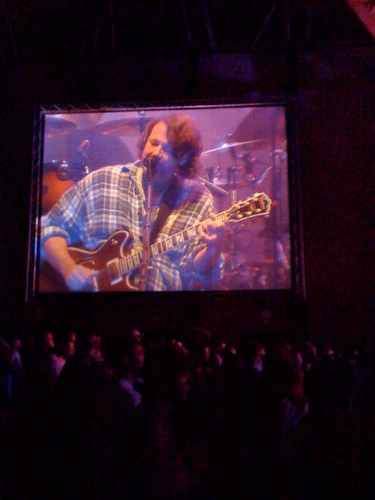
This question makes for a timely thing having just got back from spending a weekend with friends watching live music all weekend which was accompanied by shared emotional responses with say 8,000 other folk. I have the habit lately of keeping my own setlist mainly because I can’t get out as much with 4 kids to see live music and to refer to in meetings, at airports or with friends. For me the setlist represents not just the songs, but also the experience which definitely invokes emotions. The setlits conjures up items about the event/evening, a given song’s association, the people and what I’ve actually documented about a given line item. Below are two examples from this week’s venture out to see Widespread Panic, it also represents my answer to the question posed. Typically I would edit before I post, but in the name of research/content analysis….verbatim below:

10/17 – WP – ATL -Lakewood
Set 1
Worry
Drum thing into. Hatfield
Ribs n whiskey
Glory.
Sleepy monkey.
Going out west
Morning dew
Rebirtha slow.
Red beans

Set 2 9:34
Airplane.
Long jam> vacation jimmy killed it
Bears gone fishin
Pigeons
Randall bramlett?. Mega blasters old neighborhood

Chest fever.
Arlene
Bust it big.
Weight of the world.

Encore.
Walking

10/18 Atl 7:29

Set 1

Mr soul

OAS

Drum thing. Into Fishwater big

Last straw

Alg

up all night bramblett mega blasters

New tune/ dance needs no body. Long and boring

You should be glad

Ophelia.

8:35

Set 2 9:16

Chilly

You got yours

Blight huge

Rhm

Angels on high. Lame

Momma told me not to come.3dg

Superstition mega blaster

Tall boy mega

10:22

Encore

Randall. Jb is late

Picking up pieces

North

Pilgrims

Wondering

10:57

The funny thing about reading your setlist later, no matter what I’m doing or where I’m at it — even thought of music is mood altering.

Random proof-point: In the Fox News clip below you can clearly see music alters the Anchors’ moods.   I’m not so sure about the chunk of coal reference, but they could turn Jimmy down a little.

Common Thought, a brilliant day and giving back!

I clearly meant to write this earlier, but been busy trying to figure out what the status of the day is with Heuer. I still kinda don’t know what’s up, but it doesn’t mean we shouldn’t honor the good work Creative Commons is doing. So while it is Blog Action Day and the kick off of the fund raising campaign for CC, I’m going to focus Fabiana Zonca’s photo below which I found via a “Thought” tag on Flickr.

Thinking of you by Fabiana Zonca.

Thinking of you

Also you can create a video on WHY it is important/you like it, you could also put up a widget up like I have or just donate via the widget on the right to Creative Commons.