Out telling stories and finding examples

After working with a company over the last couple of weeks to adjust their message in the marketplace, I continue to realize it is tough stuff no matter how many times I’ve done it.  Every engagement is a little different, but the story hurdle is present in just about every business.  I’ve typically been challenged by most clients to get their teams to understand that marketing is always about telling a story. Often it is a new story; most often it is a more simple story.

No matter what you are marketing, it represents some type of story which highlights a single theme or idea.  How to save money, how to improve your effectiveness, how to improve your quality of life – all them threads which position a product.  Thanks to ethos3 @ slideshare.net, I now have a pitch I can point people to that is engaging and an independent validation.  At least this covers the corporate capabilities part.

View SlideShare presentation or Upload your own. (tags: rockstar maverick)

One of the hardest things to do, as an independant contractor, is to convince the person with the check that some of their other stories are too complicated or least not connected.  Most of my clients have an inside-out view of the market and often suffer from the category killer disease (CKD).  CKD is when no matter what product category they are in, their revenues or what “rank” they have, their product is the best.  The reality is sometimes it comes down to that a product is the cheapest, the easiest to use, the highest quality or maybe actually the best. The trick is to connect these benefits to the story or single idea.

Complexity: The Context of Identity

The emergence of new technologies continue to change how many of us – as individuals, business folks and our online identities management of our interactions and information is becoming increasingly more complex. Ultimately, online identities can represent people, companies, products and brands. Identity online is becoming more like a house of brands, than a branded house for many of us. The complexity of managing a portfolio of identities/brands is becoming increasingly more challenging as we engage our personal networks, customers and business networks. Context and the complexity of context is making it even more difficult.

Context Defines Identity?

So I was watching The Soup the other day and I was generally amazed at how many of the personalities/identities I actually knew. The problem is I only know of these identities/celebs because of the Soup. I have no other context, except for Anderson Cooper, who wase featured on one of the more entertaining segments in the episode I just got to watch thanks to Tivo. The other thing which has got me to thinking about identity is some work I have been doing with ASC X12 and the context of where the market is, where the organization is and where it needs to go. These two things got me thinking back to how can context of a given set of interactions impact identity or the management of identity.

100_0772 by you.

The Echo Chamber

Context is one of the more interesting challenges of identity and I as a user of many platforms have way too many context sets to manage. I’ve spent a great deal of time trying to streamline my online experience of late, but have been challenged to keep up with the pace of network specific interactions. My initial streamlining was related to getting yet another ID at ping.fm to help keep a consistent pulse across my networks and for that use case it works. The problem with ping.fm is that it is not conversational – you end up with orphaned replies on Facebook, twitter and other social networks.

Leveraging a tool which only speaks AT others rather than listening too is not a good thing for maintaining and developing relationships… With Ping.fm you end up with replies which echo into silence, until 3 or 4 days later when you check in at that given platform. Privacy and conversation are key drivers of the increasing identity crisis folks who are attempting to manage identity online with one way updates just doesn’t solve for.

Do I want my professional network to know the same thing my personal network know? How many networks do I need to update with my the latest picture of my kids?

The 4 P’s of Identity

When thinking about the say 8 accounts I commonly use, the ability to engage AND manage the relationships, responses and outreach can be a daunting task. Beyond the basic administrivia of each account, the challenge of trying to understand how to manage the mix of my activities and platforms continues to grow.

While ping.fm is interesting, it mainly is a broadcast tool, unless there is some well hidden feature I can’t find.   As a tool, it only represents the ability to consolidate presence, not the ability to manage platform capabilities, promotion and placement. Identity as a brand or product is essentially what develops in each of the channels you participate in. If each instance of identity becomes a product, that means as platforms change, people migrate and new capabilities are available on a single platform identity/brand equity is diluted and management gets more complex.

So what are the 4 P’s of identity?

  • Platform – The holder of the ID account from a technology perspective is commonly the definition of a given platform. Typically platforms have unique account management and network capabilities which are not open, for the most part, for third party management.
  • Presence – The capability set typically associated with where you are and what you are doing. Twitter or the Plurk are good examples of platforms which support presence.
  • Placement – Group membership on a platform is one way to look at placement, but as are the ways which you allow to be contacted or how you can be engaged in context of group or platform.  On some platforms you may expose email, others you might constrain to the core messaging option, such as inbox messages or the wall on Facebook.
  • Privacy– Each platform, identity and group has privacy management attributes and rules which need to be managed. The management of privacy is uniquely related to the relationship you have in context of a platform and group.

100_0756 by you.

Why is identity such a challenge online?

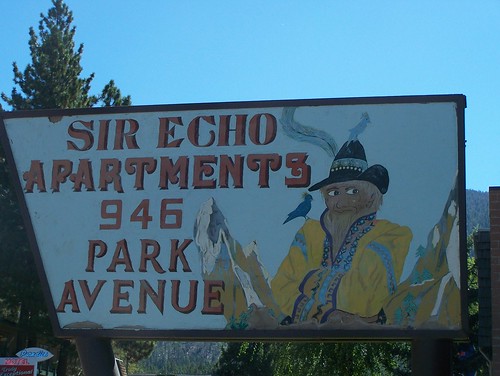
If you share content online, it doesn’t go away.   However, if you share something at a dinner table it might be moved from memory, but it definitely isn’t a broadcast or a sustaining reality.  Just imagine if that incredibly stupid thing you said after your 3rd bottle of Silver Oak lived on forever?   It is the broadcast and permanency of content/interactions which make managing context and identity a far more complex thing. As an example, my offline identity is pretty much Jon and maybe a couple of nicknames, each with their own context, but mainly that context isn’t necessarily shared, even if the moniker is used more widely. I recently got a new nickname, Echo, while a seemingly fun name and definitely has an affinity to who I am that identity has no context outside of 3 people, the adoption is getting wider than expected.  While Echo usage is growing, the context isn’t being shared.  On some level the visibility of context is greater and can be shared, not so much in the real world.

The key challenges of managing the 4 P’s of identity are unique to being online and the fragmentation, management and interaction requirements require some type of solution.  Technologies to update, integrate and provide security/authorization are out there, but a great deal of work is needed to actually manage, protect and OWN your data.  Perhaps interoperability isn’t enough, we need to also support portability to better manage identity.


DataPortability – Connect, Control, Share, Remix from Smashcut on Vimeo.

The Social Marketing Construct: Evolving Brands and Emerging Realities

Download the Social Marketing Construct

Why we wrote it:

After sitting in a Pragmatic course taught by David Meerman Scott, I came up with the idea that I just might wanna write something a little more substantial than a blog post.  David spent a good deal of effort in his New Rules of Marketing course on the value of an eBook, so I thought that might be a lofty pursuit.  I clearly needed some help; so I engaged my personal advisory board for input and volleyed ideas. We centered on brand as a construct in the context of social media adoption, more or less.

Sheryl Altschuler was kind enough to offer her experience in launching brands online for this project.  Sheryl was critical in simplifying the concepts in the eBook and developing the Social Marketing ContractChris Carfi was kind enough to write a foreword and to provide his thoughts on what would be helpful to marketers given the emerging business realities. Clearly interesting things are afoot in the evolving social marketplace. The social impact on brand management and equity represents an opportunity for marketers to re-align their focus against The Social Marketing Construct.

Many thanks to those who helped as well as those who take the time to download and take a look.  If you find it particularly useful, feel free to let some folks know about it.  The concepts in the book are a continuing area of interest for both Sheryl and me, so feedback appreciated.

Cheers!

~jon

Sometimes customer loyalty and service Hertz

The Things About Brands

Brand management and development is a serious investment for folks and a good deal of the effort is put forth in making sure the whole product or service a brand represents puts forth the right message to the market.  For me a brand’s promise on service is a critical buying criteria for most things, especially when it comes to leisure.

Travel as an Experience of Brands

Travel is about the most brand aware segment for me – I am just plain brand centric with my travel decisions.  Amex, Marriott and Hertz typically means everything is going to work out.  That being said I’ve seen some changes in my user experience in the last 12 months with key brands I choose to work with in the travel industry, which may be a response to the economy or inconsistent execution on common processes.  Doesn’t matter what the drivers – brand promises are more like concepts than promises it seems of late on my travels.   Recently I’ve decided I’m over a certain hotel chain micro-brand and now it appears that the economic downturn or just an over zealous regional manager looking to make his/her bonus/free Applebee’s $25 Gift Card in Reno just may make me switch my preferred car renting company from Hertz.

A Car Rental Reality

I’ve been renting with Hertz for nearly a decade and conservatively I’ve spent over $20K, which may not be a lot in the scheme of things, but kinda feels like a big number with a single vendor to me.  My most recent transaction probably won’t make me move from the brand since I think the key brand attributes are still intact:

  • A reasonable price – not great price, but worth the value
  • A well organized and coordinated frequent traveler program
  • Generally OK cars regardless of the situation – vacation, business or group travel.

The way I see it, if you can find a single company who can provide a service consistently regardless of location or the use case that’s a pretty important thing as a traveler, even if it costs a little more.  All you need is one username and password, one process to learn…..  My most recent trip started no different for the most part, but an interesting use case in customer engagement emerged from my most recent vacation rental with Hertz from even before I got my keys.

My experience online was great, got a van, needed a van.  With Burning Man in the region I expected to get above average rates, but not with Hertz an unadulterated price book was made available and I had a reservation in minutes.  I was definitely pleased to see that Hertz wouldn’t jack rates insanely because of Burning Man, as other vendors did with like product in services during the period.

My Hertz experience varied from the start, I had to pick up my keys instead of strolling straight to the car, but this happens at small airports and the service was good at the counter, albeit a little odd.   During the transaction there was this weird forced random Burning Man reference.  I go to lots of place and most interactions are absent a “why I was in town” when it comes to the car rental place.  Paraphrase below:

ME: Man, can you give me my keys

HIM: ID

ME: <hands id> Appreciate this <gets keys> thanks man

HIM: You going to burning man?

ME: Absolutely – be good, cheers!

Off to the car thinking these folks are certainly friendly and appear to be excited bout the influx of diverse folks for burning man – kinda cool…. I quickly find the van which I rented, drop in the bags and start getting in the car and I am greeted with the following “valued” Customer Message:

Well perhaps with this welcome as a customer I should have seen Burning Man remotely or minimally selected another vendor such as Enterprise car rental.  At this point, my car rental is becoming an increasingly emotional commercial transaction on both sides.  But with a week of vacation ahead and a little rational thought applied for a second or two, I understand that folks need to be aware that should they return a car with something that could be considered beyond normal wear and tear there might be a fee.

Good business – communicate with your customer your needs and the responsibility of the consumer.

Then I started thinking about the $175 charge, as a business guy, threatening essentially a 2X market rate should work and could represent a new little opportunistic profit center – good job Hertz!  I’m now well educated and aware there is some hyper sensitivity about Burning Man.

So just to let you know – cars get dirty on the playa.  After a week in the desert the car was a little over the top dirty and I clearly accepted the warning as somewhat valid, even if not customer centric, since it could be a bunch of work to clean.  I actually should know, I did it TWICE before turning it in.

Decision Cycle – Hertz clean for Crazy Price or Something else?

With warning in hand and a brief discussion on how to approach the situation, Em and I are off doing ROI and time benefit analysis as we head out on 80 W away Black Rock City.  From a brand perspective, you might not what your customers doing risk analysis and ROI right after a completed a commercial transaction  – just an idea…

As a math fan, I quickly figure out that is clearly more financially beneficial to detail the car myself after about 10 miles of discussion.   Well not really myself, someone else, was the plan but I figured I could ultimately contain my spend to say a $100 worst case.   So on our way out of the desert we had it detailed in Reno and the actual spend was only $90 with tip.

With that task done in full compliance of the warning it was on to Lake Tahoe for a couple of days.  Just as a point of information – did you know it’s dusty their too?  It not like the desert but dusty.  Yup, so the car did get a little more dusty on the ride to the lake and our gear added some dust and dirt into the van trunk area we notice when we left for the airport so we stopped for a second car cleaning.

After all, we already $80 already invested down this decision path. So a quick stop at self-service car wash just outside Carson City , only 20/25 miles from the airport,  made it on to the agenda.  We joked that it was an acceptable investment protection to purchase the following items/services:

  • Cleaning stuff – $7
  • Using Car Wash Vacuum – $3.50
  • Quick Rinse and Wax in the self-service wash – $4-ish
  • Paper towels – $2

In just under 15 minutes a clean car again!   Fast forward 25 minutes: An extra charge for having to detail the interior of the car was the verdict from Hertz, good news only $75.00.   At least, I didn’t get charged the whole $175 because I did a “good job” on the exterior, not my words but the cheerful manager who assessed the fine.  I actually think I did good job on the interior too, but you be the judge, sorry iPhone picture quality – the whole set is here..

photo.jpg by you.

Brand Integrity and Consistency

Fairly clean stuff is how I saw it and still do. Every car I rent in Chicago in the winter is dirtier – inside and out.  So just how did the consistency of the brands processes in Reno vary from standard, since no one actually looked at the interior of the car prior to my assessment of a fee?  Revenue? Gift Card?

I know that travel can sometimes be exciting and confusing, but I’m pretty sure no one opened a doors on any part of the vehicle prior to my being informed I was being charged for an interior detail.

The actual flow of the car return process deviated from the standard Hertz experience as soon as I was scanned – no inspection, no “would you like to leave it on the amex”, but a an immediate waive over of the shift manager or someone who was allowed to wear a white shirt instead of the outside uniform, regardless definitely a person of authority.  Actually a nice person I think, who instead of saying “Hello, how was your car?”, informs me that whilst I did a nice job on the outside I was still being charged for an interior clean.  Weird – as no one has STILL looked at the car interior yet….. After my being assessed the fee, a real inspection occurred which again complimented me on my thoroughness, this time on the engine, yet still resulted in a fee.

That’s my story no real point, except it make mes wonder if Hertz should have:

  • Raised my prices for the week to make it not such a damaging brand experience for me
  • Should have followed their traditional processes, like inspect the car first to provide some consistency
  • Not had a same store sales contest for the best shift manager who “up charges” the most details
  • Should just overall raise the rates of everyone to maintain quality of service and consistency
  • Not messaged me with the warning and made me more aware of the situation throughout the rental period, thus reducing the likelihood of my paying attention to the whole thing and just accepting that a fee was due.

I obviously don’t know all the drivers for the deviation from my typical brand experience, but the process and experience inconsistency is the most memorable for me, not the $75.  In the end, I think I’m like $5 ahead (less opportunity costs) and perhaps just a little more willing to choose another vendor.

Funny thing about loyalty is consistentcy can be more important than dollars for some….maybe not to Hertz.